As per our understanding, Floor Area Ratio (FAR) means the quotient obtained by dividing the total covered area (plinth area) on all floors by the area of the plot.
As per our understanding, Ground coverage means built up area covered at ground level:
For the purpose of calculating ground coverage area under shaft, chute, lift well and staircase shall be counted towards ground coverage.
As per our understanding, Dwelling Unit means an independent housing unit with separate facilities for living, cooking and sanitary requirements.
Floor area ratio (FAR) can sometimes also be called floor space ratio (FSR), floor space index (FSI), site ratio or plot ratio.
In India, both floor area ratio (FAR) and floor space index (FSI) is used. To clarify the difference between the two-FAR is a ratio, while the latter, FSI, is an index. Index numbers are values expressed as a percentage of a single base figure. Thus, an FAR of 1.5 is translated as an FSI of 150%.
To explain the concept of Floor Area Ratio (FAR), we will take the help of an example. An FAR of 100 means that, as a homeowner, you can build a one-story building on your plot or a two-story building on half your plot. FAR of 200 means that you can build a two-story building on your plot or a four-story building over half of your plot, and so on.
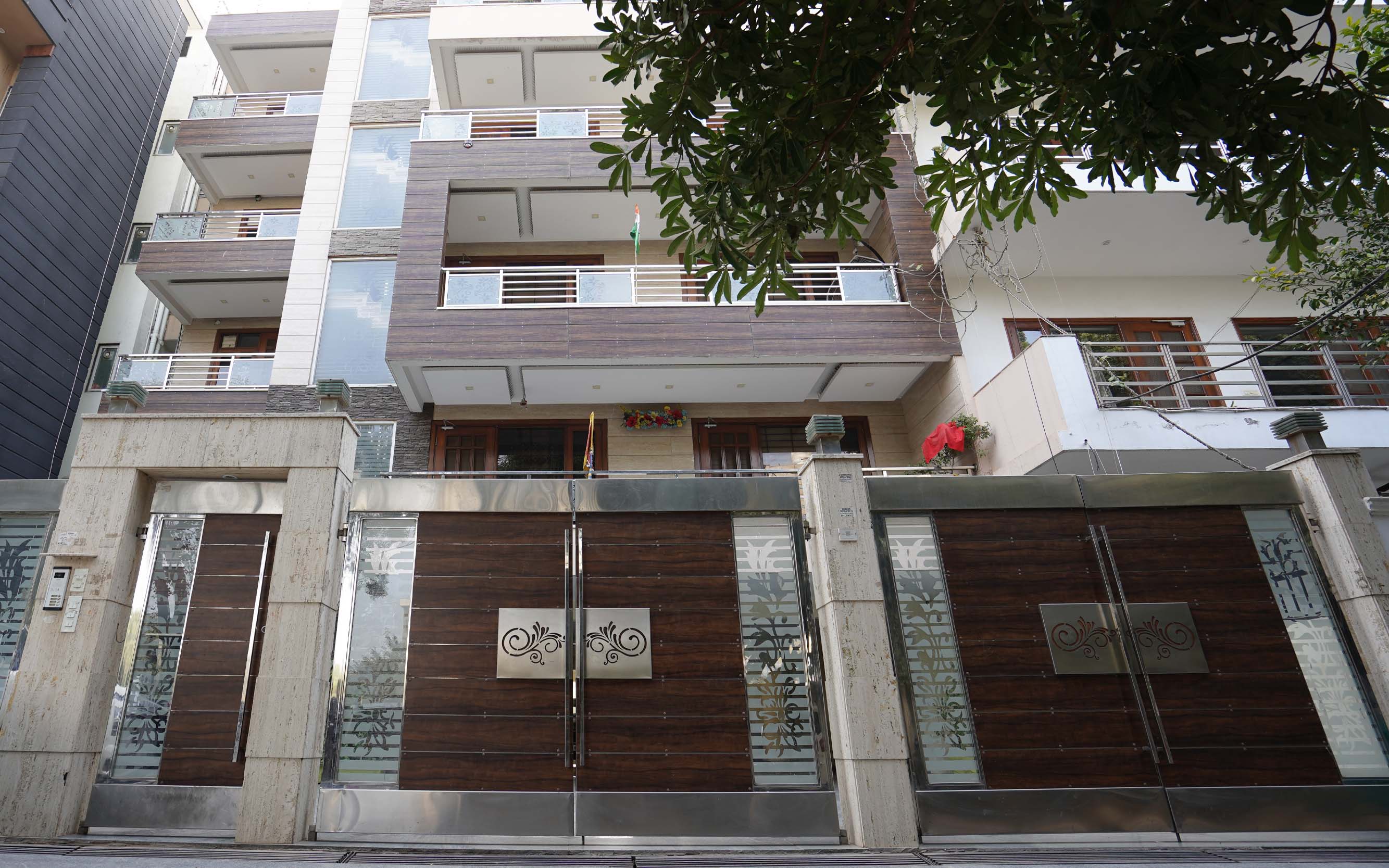
To further explain our previous example, if you have a 300 sq. yard (250 sq. m) plot in Delhi, then the FAR (as checked from the table) comes out to be 300. That means that you can build 3 floors with 100% of the area, i.e. 2691 sq. ft (250 sq. m) or 4 floors with ¾ (75%) of the area, i.e. approx 2025 sq. ft. (187.5 sq. m).
As discussed earlier, every city is just like a structure and therefore is constrained by the capacity it can withstand. If you go beyond this capacity then it can lead to various issues.
FAR defines this load-bearing capacity for a city to maintain the general well being of the citizens based on a lot of factors such as the ability to cope with natural disasters, etc.
The concept of floor area ratio is used by the government to divide the land into zones so that urban density can be restricted. It further puts a limit on the persons allowed in a building. FAR is also commonly used by architects and construction workers to accurately decide the building design and structure.
Discuss your home design & construction queries with us. And, understand how you'll have a
surprise-free home construction experience at abydos.